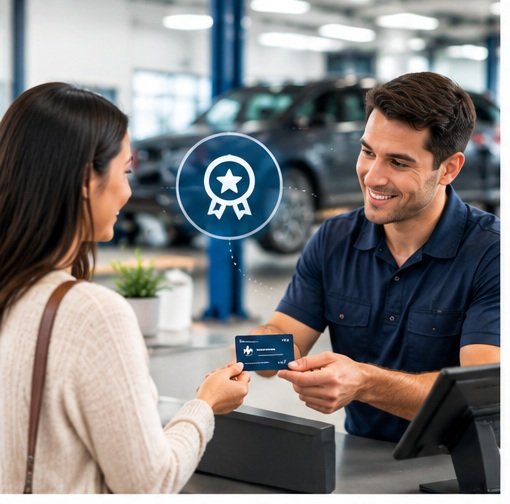
A customer loyalty program should do more than hand out discounts. For an independent auto repair shop, the real objective is to make it easier for customers to return, understand their vehicle’s needs, and feel confident choosing the same team for future service. A well-designed program supports those outcomes through consistent communication, useful benefits, and a customer experience that feels personal rather than pushy.
Before investing in points, coupons, or complicated software, define what loyalty means for your business. Do you want more customers to return for scheduled maintenance? Would you like to increase referrals, reduce missed appointments, or encourage customers to book their next visit before leaving? A clear goal helps you build a program you can actually measure.
Start with the Customer Journey
Map the steps customers take from their first visit to their next service appointment. Consider what happens after an estimate, after a completed repair, and when a recommended maintenance item is coming due. These moments are opportunities to provide helpful information and make the next step convenient.
For example, a customer who has just had brake service may appreciate a clear invoice, a summary of the work completed, and a reminder to contact the shop if they have questions. A customer whose vehicle is due for routine maintenance may value a timely reminder and a simple way to book. These practical touches can build trust without requiring a large discount budget.
Choose benefits that customers value
The best reward is not necessarily the biggest discount. Customers may value priority scheduling where operationally feasible, a complimentary seasonal vehicle check, a small credit toward eligible future service, or a referral thank-you. Any offer should be easy to explain and financially sustainable.
Calculate the real cost before launching a reward. Consider parts and labor, average ticket size, redemption rates, and whether the offer encourages genuinely incremental visits or simply discounts work that would have happened anyway. Establish clear terms, including eligibility, expiry dates where applicable, exclusions, and how customers can redeem the benefit. Avoid rules so complicated that front-desk staff struggle to explain them.
Make the program simple to join and use
Customers should understand the value in a few sentences. Keep enrollment straightforward, collect only the information you need, and explain how their information will be used. Staff should have a consistent script so customers receive the same explanation at the counter, over the phone, and in follow-up messages.
A customer relationship management system (CRM) can help maintain accurate contact records, note communication preferences, and organize follow-ups. The specific automation available depends on the system and configuration, so confirm the features you plan to use before promising automated rewards or reminders. Explore [Service-Intel CRM](https://service-intel.com/service-intel-crm/) to see how customer-management tools may fit into your workflow.
Use accurate records to personalize follow-ups
A loyalty program is only as reliable as its customer data. Duplicate profiles, outdated phone numbers, missing vehicle details, and inconsistent service notes can lead to irrelevant messages or missed opportunities. Create a simple process for staff to confirm contact details and record completed work.
Personalization should be useful, not intrusive. A reminder tied to a customer’s service history is generally more relevant than a generic promotion sent to everyone. Respect consent requirements and communication preferences, provide a clear opt-out for marketing messages, and separate promotional campaigns from necessary service communications where applicable.
Measure retention, not just enrollment
A large sign-up count does not automatically mean the program is working. Track repeat visits over a defined period, the percentage of customers who return, referrals, redemption rates, customer feedback, and revenue from returning customers where reliable data is available. Compare results with a baseline from before the program started.
Give the program enough time to produce meaningful results. Vehicle service cycles vary, and a short campaign may not reveal whether customers are changing their behavior. Review results monthly or quarterly, and segment the data when practical—for example, by first-time versus established customers or by service type. Avoid relying on a single metric, since a high redemption rate could still be unprofitable if rewards are too generous.
Train the team and keep improving
Employees determine whether a loyalty program feels helpful or awkward. Train advisors and front-desk staff on the program’s purpose, rules, and common questions. Make sure they know when to mention it and when a customer would prefer a straightforward service conversation.
Ask customers for feedback, look for repeated questions, and remove unnecessary steps. Start with a manageable pilot rather than launching a complex system across every customer segment at once. If the program adds too much administrative work, simplify it. A consistent, easy-to-run program is more valuable than an elaborate one that staff rarely use.
Common mistakes to avoid
Avoid making discounts the only reason to return, promising benefits the shop cannot consistently deliver, or sending too many promotional messages. Do not encourage customers to approve work they do not need just to earn points or reach a reward threshold. The program should reinforce sound recommendations and transparent service—not influence technical decisions.
Also avoid changing terms without communicating clearly. If a benefit must be discontinued or updated, explain the change in advance and honor commitments already made under the stated terms. Clear expectations protect customer trust.
Frequently asked questions
- What makes an auto repair customer loyalty program effective?
A useful program has a clear benefit, simple rules, consistent delivery, and a reliable way to measure repeat customer behavior. It works best when the underlying service experience is already strong. - Should a repair shop offer discounts?
Discounts can be one option, but they are not the only one. Convenience, transparent communication, timely reminders, and appropriate service benefits may encourage repeat visits without reducing margins as much. - How should a shop measure customer loyalty?
Track repeat visits over a consistent period, retention, referrals, program participation, customer feedback, and the cost of rewards. Compare results with a pre-program baseline rather than judging success by sign-ups alone. - Can a CRM help manage a loyalty program?
Depending on the platform and setup, a CRM may help organize customer records, segment audiences, and schedule follow-ups. Verify specific features and integrations before building the program around them. - How often should loyalty messages be sent?
There is no single ideal frequency for every customer. Make messages relevant, respect contact preferences and consent, monitor unsubscribes and complaints, and avoid sending promotional messages simply because a schedule says to.
Build loyalty through consistent service
A loyalty program should make a good customer experience easier to repeat. Start with one business goal, choose a benefit customers can understand, keep records accurate, and review the results before expanding. For more information about customer-management workflows, visit Service-Intel CRM and browse the Service-Intel blog for related operational guidance.